
INTRODUCTION
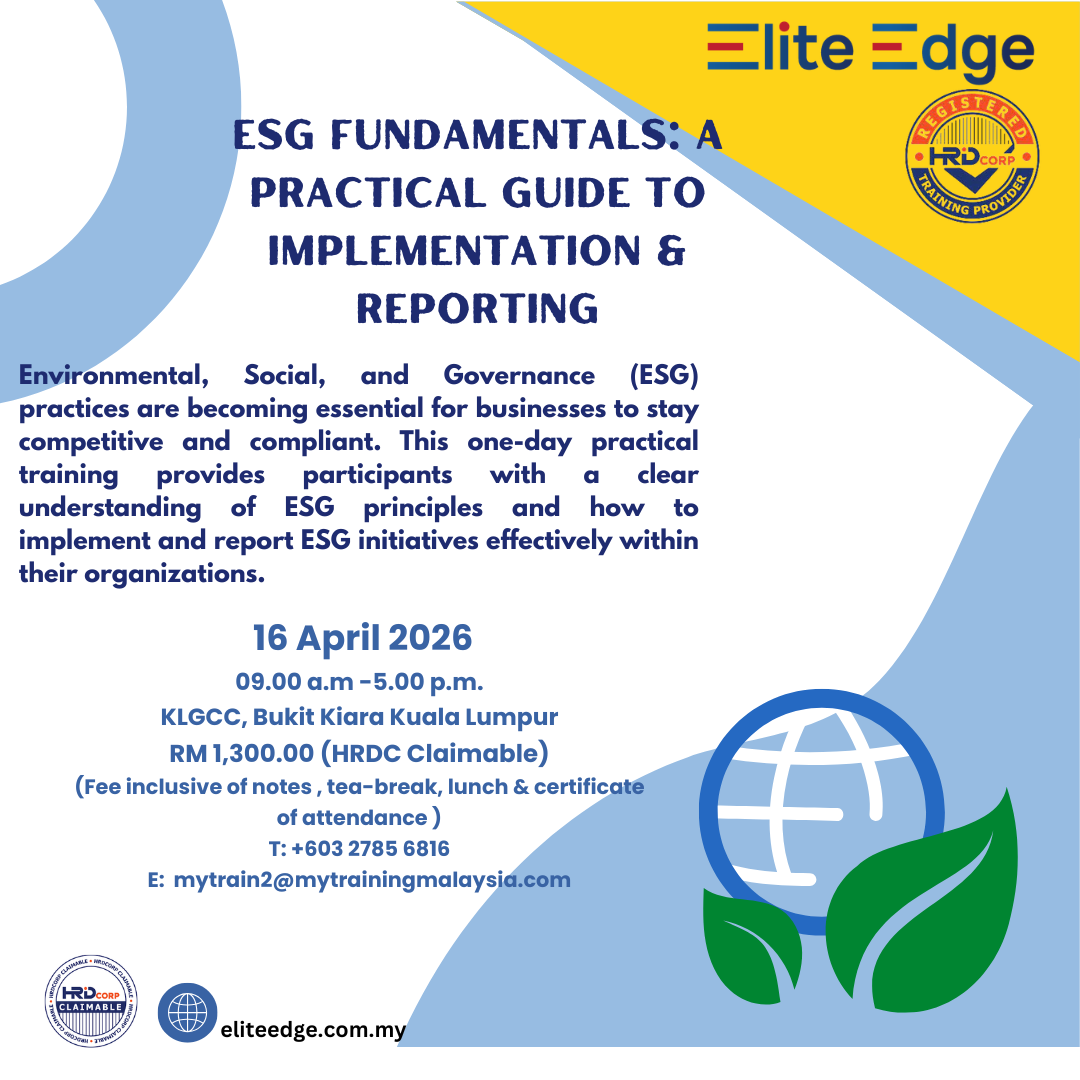
In today’s rapidly evolving business landscape, sustainability is no longer a choice but a strategic necessity—especially for Small and Medium Enterprises (SMEs). Environmental, Social, and Governance (ESG) principles have emerged as key drivers influencing how businesses operate, compete, and create long-term value.
This program is designed to provide SMEs with a comprehensive understanding of sustainability concepts, as well as the growing importance of ESG reporting. It introduces participants to the core pillars of ESG, the global and local developments shaping sustainability practices, and the expectations placed on businesses across industries.
SMEs are increasingly facing mounting pressure from a wide range of stakeholders—including customers, suppliers, business partners, financial institutions, government agencies, regulatory bodies, employees, investors, non-governmental organizations (NGOs), and society. These stakeholders are demanding greater transparency, accountability, and responsible business practices.
In response to these expectations, it is essential for SMEs to begin integrating sustainability into their business strategies and daily operations. This program will guide participants on how to identify relevant ESG risks and opportunities, adopt practical sustainability initiatives, and establish effective monitoring, measurement, and reporting frameworks.
By the end of the training, participants will be better equipped to align their business practices with ESG principles, enhance stakeholder confidence, improve operational resilience, and position their organizations for sustainable growth in an increasingly ESG-driven economy.
Upon completion of this programme, participants will be able to:
- Understand and describe the core concepts of Sustainability and ESG Reporting
Participants will gain a clear and structured understanding of sustainability principles, including the Environmental, Social, and Governance (ESG) pillars, as well as the purpose and importance of ESG reporting in today’s business environment. - Explain practical methodologies for implementing sustainability initiatives within organizations
Participants will be exposed to step-by-step approaches, frameworks, and best practices that organizations can adopt to integrate sustainability into their operations, policies, and corporate strategies. - Develop and implement ESG tracking and reporting mechanisms
Participants will learn how to establish key performance indicators (KPIs), monitor ESG-related data, and design effective reporting systems to meet stakeholder expectations and regulatory requirements.